As an artist, you might have heard that your style is something that naturally develops on its own, simply by creating a large volume of art. However, what if I told you that’s not completely accurate? In reality, your style is built from the countless small choices you make throughout your artistic journey. The great news is that you can intentionally shape and develop your style.
The Formula to Developing Your Style
The initial step in developing your style is determining the appearance you want your art to have. While this might seem straightforward, it can be challenging since there’s often a gap between the art you enjoy viewing and the art you enjoy creating. Spend some time considering this distinction and reflect on the type of art you truly love to make.
1. Collecting Inspiration from many Art Styles
To begin, gather a variety of art pieces that you feel drawn to. Don’t limit yourself—explore art from different mediums, subjects, and styles that captivate you. You can even visit an art museum, Pinterest, Instagram, etc.. and note what catches your attention. After collecting this inspiration, take the time to identify the common thread that ties these pieces together. What is the underlying connection among all these works?
For me, I did took some random pictures on the street that I see connecting to me. Or when I use social media like Facebook or Instagram or Pinterest, I often take the screen shoot or save the photos in my phone gallery.
You can save all of the inspiration in the album called “My Art Style” or anything you want
2. Analyzing Your Inspiration
To identify the through-line between all these art pieces, imagine you’re a gallery curator planning an exhibition featuring your selected works. Consider what you would title the exhibition.
- What overarching theme would it have?
- How would you describe it in promotional materials?
- Reflect on what consistently draws you to these artworks. Is it the innovative use of lighting and color to narrate a story, evoke an emotion, or create a specific atmosphere?
Take your time to discern what truly connects these pieces and what appeals to you most about them.
Me, personally, as a character illustrator, especially portrait illustrations and I am also love the fashion illustration, I tend to save the kind of style to my Pinterest board
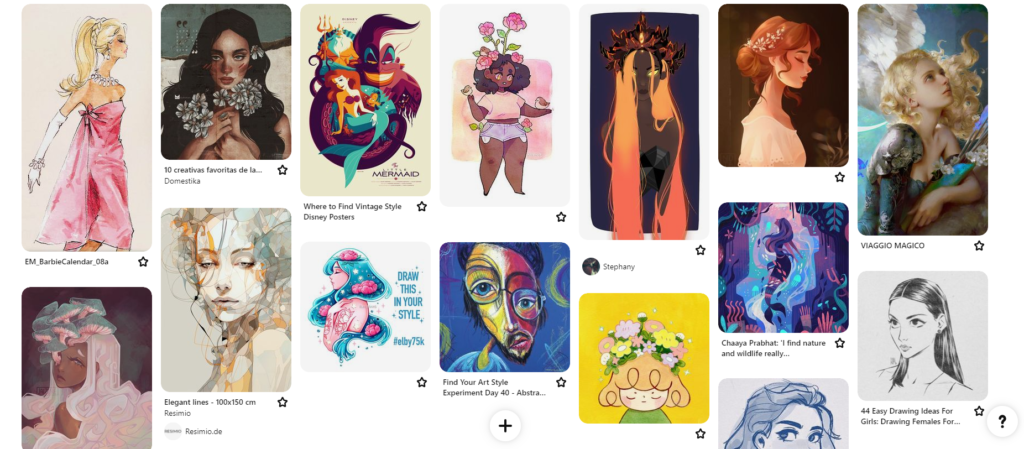
As I can tell, I love the arts that have these thing
- Color : High-saturated
- Background : Low complexity
- Focus : Portrait
- Extra : Flowers, trees => something related to Nature
- Style : Not too cartoon. I love the style that can really tell the figure in the characters’ body, face, etc
Actually, I do have a lot of worries of how my art gonna go. Sometimes I like to draw this, but I may change to another style if I see any new art pieces that come and reach me.
But it’s OK because as I said in the beginning of this post : Your style is built from the countless small choices you make throughout your artistic journey
3. Creating a Curriculum or Plan to build your Art Style
Once you’ve noted the connections between the pieces of art you collected, transform these characteristics into specific goals. Imagine you are designing a university course focused on this movement or collection of art.
Consider how you would teach someone to create art in this style. What lessons would you cover in the first week compared to the second week? By the time you’ve outlined this course curriculum, you will have an actionable plan to develop your ideal style.
For example, in my case I would create a plan to learn these thing and start to apply them to my art piece
- Color Theory
You can read one of my post here about Color Theory
MASTERING COLOR THEORY: A COMPREHENSIVE GUIDE - Background Design
- Anatomy : to learn about human’s face, body figures
- Trees, Flowers Drawing
As you progress through the syllabus, you’ll realize that you’re developing something uniquely your own. Drawing inspiration from various sources and infusing it with your personal touch will result in a creation unlike anything seen before. You won’t merely be imitating other artists; you’ll be expressing your individuality. This uniqueness is crucial.
As an artist, you don’t want to be a replica of someone else, right?
Conclusion
Developing your style isn’t about drawing inspiration from just one artist. Instead, it’s about exploring the breadth of art history, collecting what inspires you, understanding why it resonates with you, and determining how you can incorporate those elements into your own work. If you’re interested in establishing a consistent creative practice, consider following the curriculum we’ve outlined. This approach will help you blend various influences into a unique and cohesive style.
credit : Kelsey Rodriguez